There’s a persistent idea that woody plants, especially shrubs, should be trimmed in fall, sort of like a ritual autumn cleanup. It’s also tempting to prune low-hanging tree branches that have swatted your face each time you’ve mowed this summer. Is fall pruning recommended?
The answer is straightforward: No. Pruning in late summer or fall is not recommended, and actively discouraged by nearly every research univerity.
Fall pruning might not kill the shrub or tree outright, but it could cause irreversible damage. Here’s why fall pruning is dangerous:
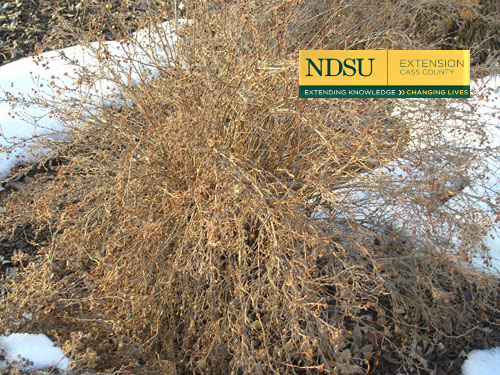
- Pruning stimulates new growth. That’s great in spring and early summer, but when pruning causes new, fresh, young, tender shoots to sprout in late summer, they don’t have enough time to grow, mature and toughen up before winter sets in. The still-tender tip growth that didn’t “harden off” can be injured during winter. When next spring arrives, the plant might be covered with dead twigs.
- Pruning wounds don’t recover as efficiently in late summer and fall. Plant cell growth slows as nature readies trees and shrubs for winter. Cut surfaces don’t compartmentalize and seal themselves the way they do prior to mid-summer. Open pruning wounds make branches more susceptible to winter injury.
- Pruning branches in fall creates exposed surfaces that are vulnerable to drying out during winter, often resulting in dieback.
- Wounds that don’t compartmentalize adequately are like open sores in which fungal or bacterial cankers and rots can develop irreversibly.
- There really is no good reason to prune or trim in fall. It offers no advantages, and creates possibilites for injury.

When is the best time to prune? Most deciduous trees and shrubs are best pruned in late winter or early spring before buds “break” and before branches leaf out. Lilacs and other spring-blooming shrubs can wait until after flowering, but for a total rejuvenation of old, leggy lilacs or spireas, early spring is better, cutting back to 6 inches above ground level.
Pruning is sometimes best delayed until after leaves have fully enlarged, such as maples and birch, which can bleed sap, although the bleeding doesn’t harm the trees. Generally any pruning tends to be safe if finished before July 4. This date is often called Independence Day for Gardeners, as it’s the date to stop certain activities, including pruning. New growth stimulated will have time to harden off, and wounds will have time to compartmentalize and seal.
One exception to this principle: the withered flower clusters of spireas can be sheared off, even if a little later than July 4, to make a neater shrub.
Evergreen trimming is best in May and June.
Give the pruning shears a rest until next spring. “Happy Gardening!”