Spring fever and yardwork go together like Martha Stewart and designer compost containers. Raking the lawn lets us enjoy a nice spring day, get some exercise and keep our lawns healthy. But is there a danger of starting too early?
First, let’s examine why we rake lawns in spring:
- Grass often gets flat and matted under winter snow. Raking fluffs it up.
- Raking aerates the surface.
- Excess thatch is reduced.
- Raking aerates dead patches from winter diseases like snow mold. Often raking is all that’s needed for recovery.
- Raking cleans up the trails left by voles as they wound their way across the lawn under snow. Vole trails usually recover fine, just by raking.

Can lawns be damaged by raking too early in spring? Yes. If lawns are too moist, grass plants can be ripped apart, causing lawn injury if vigorous, heavy raking is done too soon.
How do you know when it’s safe to begin spring lawn raking? There’s an easy way to tell: If you can kneel on the lawn without getting a wet spot on your jeans, the lawn is ready to rake.
If a lawn has patches of gray-white snow mold, we can begin a little earlier by gently using a flexible-tined leaf-type rake to rake away the matted, moldy patches, which aerates the area, helps the patches to dry, and is usually all that’s needed to make the mold disappear. Rake gently and avoid tramping around on a moist spring lawn, as it causes soil compaction. After the lawn has dried and firmed, return for a more thorough raking. 
Areas of vole damage can also be raked earlier than the rest of the lawn. As soon as possible, use a leaf rake to fluff up areas where voles have make their surface tunnels, and rake away loose dead grass. Rake with caution if the lawn is still moist, and avoid tramping around on a wet spring lawn, as soil compaction can result, as mentioned earlier. After the lawn has dried more completely, return and rake the damaged areas more thoroughly.
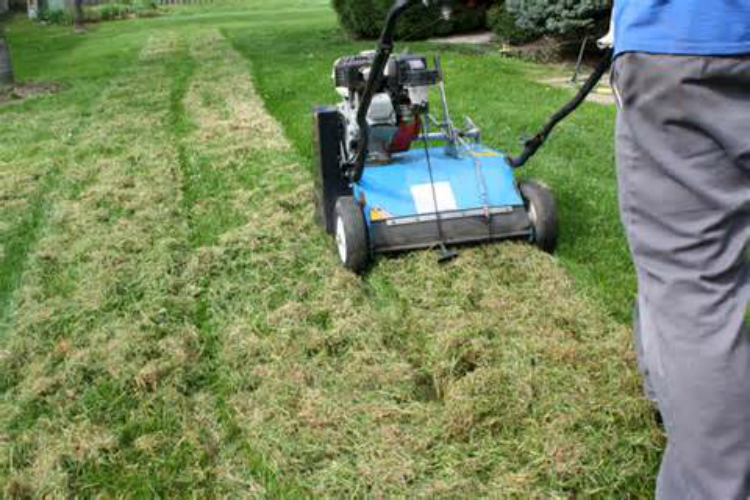
What about power-raking? University research recommends waiting with power raking until grass is green and growing, and has been mowed several times, rather than power-raking earlier. The same is true of core-aeration.
Enjoy the spring, and Happy Gardening!