Mother Nature has wisely given her creatures, even grass, a strong survival instinct. Our region’s most common, well-adapted grass, Kentucky Bluegrass, is able to enter dormancy during times of heat and dryness, common in mid-summer. During these adverse conditions, grass hunkers down, retreats into dormancy, and is able to remain alive, even if brown. When moisture and cool weather return, the grass reactivates, resumes growth and turns green. If not for this survival ability, grass could die during dry spells.
It isn’t always possible to water a lawn, and although the grass goes dormant, at least it’s alive. But there are ways to keep a lawn green in mid-summer while conserving moisture. The following tips help keep turf healthy:
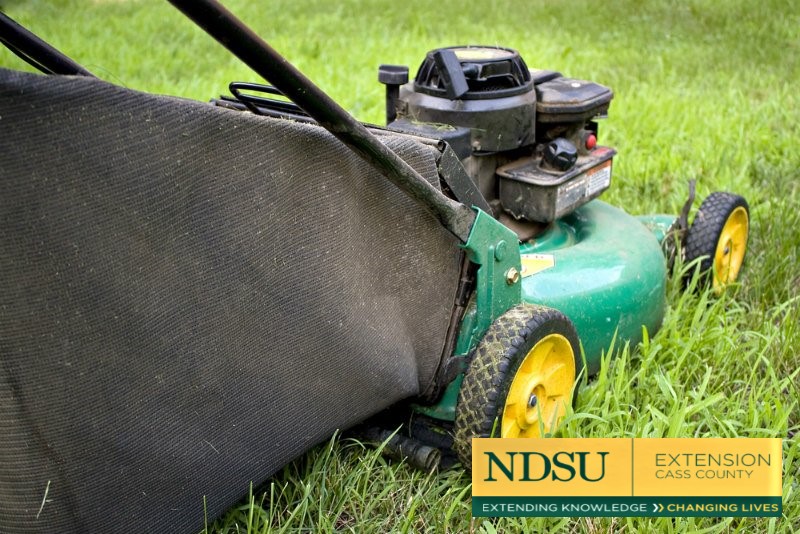
• Set the lawnmower’s mowing height so the grass will be cut three inches high. At this height, grass roots are shaded, the soil stays cooler, moisture is conserved and weeds are lessened.
• Avoid short mowing heights that expose the grass crowns to sun and heat. Grass that’s mowed short browns more quickly in summer’s heat, and soil moisture evaporates rapidly. No need to bag clippings; the clippings filter down, keeping the roots cool and conserve moisture. As they decompose, nutrients are released.
• Interesting excavations of grass plants at various mowing heights have shown that the health of the root system is directly proportionate to the mowing height. The higher the mowing height, the deeper and more vigorous the root system. Grass kept shorter has a shortened root system, that’s less capable of pulling soil moisture from below.
• Take a few minutes to sharpen the mower blade. Even without an electric grinder, a handheld file can improve a blade’s edge. A sharp blade makes a crisp, clean cut that makes the lawn appear greener. A dull blade shreds grass edges, making the lawn appear dull.
• If we water the lawn, we should water deeply and less often, which encourages deep, healthy root systems. Frequent shallow sprinklings cause shallow roots that quickly suffer if the lawn’s water addiction is suddenly interrupted.
• When watering, apply one inch per week, applied in one application, or divided in two if the soil is light and sandy. A timely rain lets us skip a week. Watering in this manner keeps a lawn green though most of summer.
• To monitor how much is being applied by an automatic lawn sprinkling system, locate several straight-sided soup or tuna cans on the lawn. Strive to apply one inch per week in one or two applications, rather than every-other-day light sprinklings.
• Fertilize this September, and next year’s lawn will be even better.